
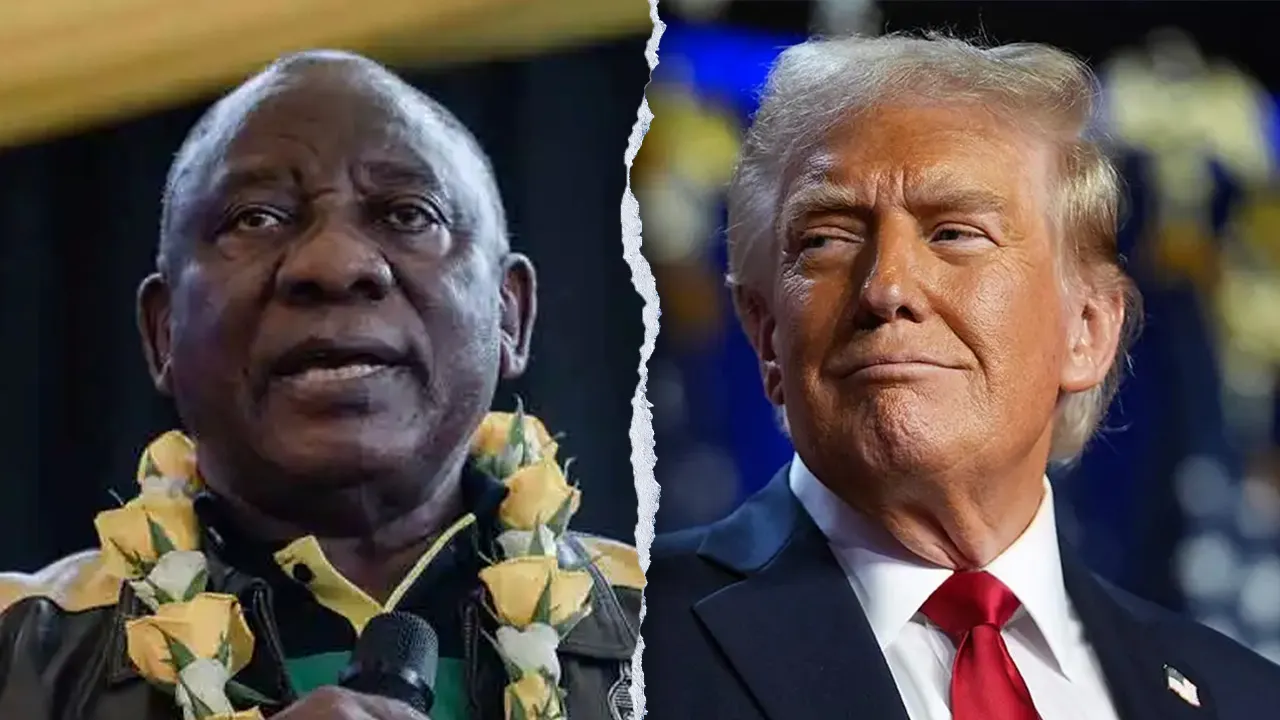
JOHANNESBURG: Tensions between the United States and South Africa have escalated as the G-20 Leaders’ Summit takes place this weekend in Johannesburg. Recently, White House deputy press secretary Anna Kelly criticized South African President Cyril Ramaphosa after the country declined to allow a U.S. Embassy delegation to attend the closing ceremony.
As South Africa currently holds the G-20 presidency, Ramaphosa’s spokesperson stated that the president would not hand over the ceremonial gavel to a junior diplomat. The U.S. had requested that the embassy’s chargé d’affaires represent them at the ceremony.
In their ongoing war of words, Kelly expressed that Ramaphosa initially claimed he would pass the gavel to an “empty chair.” Now, she argues, he is obstructing a smooth transition for the G-20 presidency to the United States, which will take over next year.
WHITE HOUSE RESPONDS TO G20 BOYCOTT REPORTS
Kelly remarked, “This, along with South Africa’s push for a G-20 Leaders Declaration despite U.S. objections, shows they are using their G-20 presidency to undermine its core principles. President Trump looks forward to restoring legitimacy to the G-20 when the U.S. hosts it in 2026.”
Former President Trump had previously pulled out of the summit, citing concerns over alleged racial discrimination against South Africans of European descent.
In a related note, South Africa’s chief rabbi, Dr. Warren Goldstein, criticized the G-20 for not addressing significant human rights issues during the summit. He questioned why the G-20 Leaders Declaration overlooked the ongoing violence facing Christians across Africa, labeling it a moral failure.
He stated, “How can the first G-20 hosted in Africa ignore that the continent is a major front for Islamist terrorism? Just last Friday, over 300 girls and 12 teachers were kidnapped from a Catholic school in Nigeria. Who will advocate for these victims?”
Rabbi Goldstein lamented that only one world leader, Italy’s President Giorgia Meloni, had spoken out about Christian persecution during the summit. She called on the Nigerian government to enhance protection for religious communities in light of the violence they face.
The final G-20 Leaders’ Declaration issued by South Africa included a vague condemnation of violence against civilians but did not specifically mention religious persecution or recent attacks faced by Christians in various countries.
As the summit continues, the U.S. officially stands as “absent,” with no representation except for the American flag displayed in the media center. The atmosphere at the summit reflects deeper tensions and the complexities of global diplomacy.
