Close Menu
  • Home
  • World News
  • India News
  • Business News
  • Health
  • Sports
  • Indian Diaspora In US
  • Technology
  • Bollywood
  • Education
Facebook X (Twitter) Instagram
Wednesday, June 10, 2026
Breaking News
  • India’s Top Edtech Giant Shifts Strategy on Student Loans
  • Camera Plummets During Football Match, Crew Just Escapes Close Call at FIFA World Cup
  • “Rising Pint Prices in the UK: What’s Behind the Surge Since the Last World Cup?”
  • Anthropic India Distinctly Sets Itself Apart from Its U.S. Counterpart
  • China’s Ride-Hailing Drivers Amp Up Competition with Karaoke and Haircuts
  • Lahore 1947 Transforms into Batwara 1947: Sunny Deol Reveals First Look and Title Ahead of August 14 Launch
  • US State Department decries rising tide of executions targeting Iranian protesters
  • Why the Indian Diaspora is Captivating American Attention
Facebook X (Twitter) Instagram
India Bulletin
Advertisement
  • Home
  • World News
  • India News
  • Business News
  • Health
  • Sports
  • Indian Diaspora In US
  • Technology
  • Bollywood
  • Education
India Bulletin
Home»Technology»Global Race to Close the Tech Gap with the U.S.
Technology

Global Race to Close the Tech Gap with the U.S.

October 6, 20253 Mins Read
Facebook Twitter Email
Share
Facebook Twitter Email


China’s AI Chip Industry Gains Traction but Faces Challenges

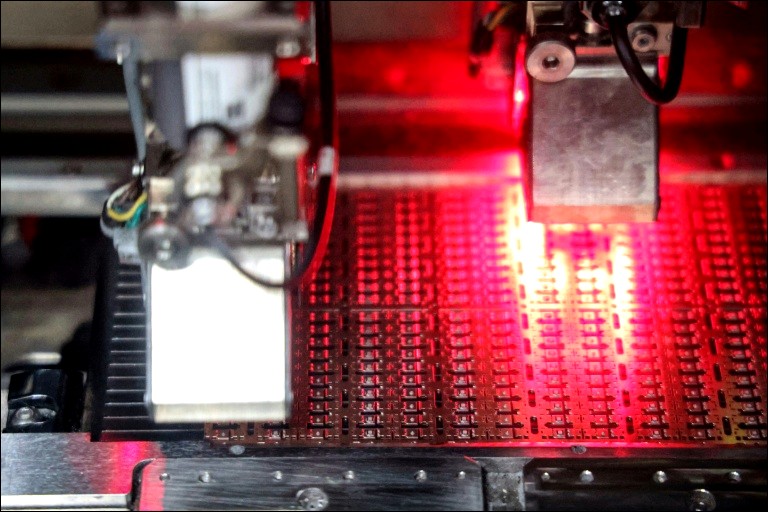
China is making significant strides in developing advanced artificial intelligence chips. However, experts believe that it will be challenging for the country to catch up with industry leader Nvidia within the next ten years.

This initiative to boost its chip sector is seen by Beijing as a way to navigate the restrictions imposed by the United States on the export of high-tech chips. These chips are vital for AI systems, and the U.S. government cites national security concerns regarding their sale to China.

Stephen Wu, a former AI software engineer and the founder of Carthage Capital, emphasized that “China aims for chips that sanctions cannot take away.” However, he cautioned that it may take longer than expected to achieve full parity with Nvidia’s cutting-edge technology in areas like memory and software.

Chinese firms have recently announced plans to upgrade their computing capabilities and ramp up the production of advanced semiconductors, which has positively affected their stock prices. Despite this, Wu highlighted the need for faster progress in high-bandwidth memory and packaging—considered the most complex aspects of chip development.

Wu explained the difficulty of making these advanced chips by comparing it to “carving a stone sculpture with a hammer instead of a chisel.” The consensus among industry experts is that China requires at least five to ten years to catch up with global leaders. Dilin Wu, a research strategist at Pepperstone, noted, “While the future looks promising, we are not there yet,” referencing the remaining gaps in performance and energy efficiency.

Demand for AI services is swiftly growing in China, and despite substantial government backing for chip development, the investment needed is enormous. Companies like Alibaba have seen their stock prices double as they heavily invest in AI technology. Huawei, a leading player in the semiconductor industry, plans to significantly increase production of its high-performance Ascend 910C chip in the coming year.

Even Xiaomi, which previously struggled in chip design, is returning to the semiconductor arena, with its CEO stating that chips are essential for the company’s success in producing high-end smartphone technology.

As the largest consumer of semiconductors worldwide, China represents a massive market for Nvidia. However, challenges remain, including U.S. restrictions affecting major Chinese companies’ ability to acquire top-tier Nvidia processors. Additionally, Nvidia now owes a percentage of its revenue from specific AI chip sales in China to the U.S. government.

Nvidia’s CEO, Jensen Huang, has warned that restrictions could inadvertently accelerate China’s chip advancements, urging the company to stay competitive. As the race for AI chip supremacy heats up, the outcome is still uncertain, but China is clearly determined to make its mark in the industry.

Beijing Chen Cheng China chip design chip industry Dilin Wu Nvidia Semiconductors Stephen Wu US restrictions
Share. Facebook Twitter Email
admin
  • Website

Related Posts

China’s Ride-Hailing Drivers Amp Up Competition with Karaoke and Haircuts

June 10, 2026

“‘No Company Town Here’: Seattle Enacts Data Center Freeze Amid Tech Hub Concerns”

June 10, 2026

China’s Tech Blueprint: A Winning Strategy in Action | Legis1

June 9, 2026
  • Facebook
  • Twitter
  • Instagram
Don't Miss

India’s Top Edtech Giant Shifts Strategy on Student Loans

Camera Plummets During Football Match, Crew Just Escapes Close Call at FIFA World Cup

“Rising Pint Prices in the UK: What’s Behind the Surge Since the Last World Cup?”

Anthropic India Distinctly Sets Itself Apart from Its U.S. Counterpart

Started in 2004, India Bulletin is the largest and
most read South Asian publication
in Chicago and surrounding Midwest.

  • Home
  • About Us
  • Contact
  • Advertise With Us
  • Privacy Policy
  • Terms of Use
  • Disclaimer
  • CCPA
News
  • Bollywood
  • Business News
  • Health
  • India News
  • Indian Diaspora In US
  • Sports
  • Technology
  • World News
Facebook X (Twitter) Instagram

Type above and press Enter to search. Press Esc to cancel.

Accessibility Adjustments

Powered by OneTap

How long do you want to hide the toolbar?
Hide Toolbar Duration
Select your accessibility profile
Vision Impaired Mode
Enhances website's visuals
Seizure Safe Profile
Clear flashes & reduces color
ADHD Friendly Mode
Focused browsing, distraction-free
Blindness Mode
Reduces distractions, improves focus
Epilepsy Safe Mode
Dims colors and stops blinking
Content Modules
Font Size

Default

Line Height

Default

Color Modules
Orientation Modules