
Carbon Markets and Climate Change: A Deep Dive
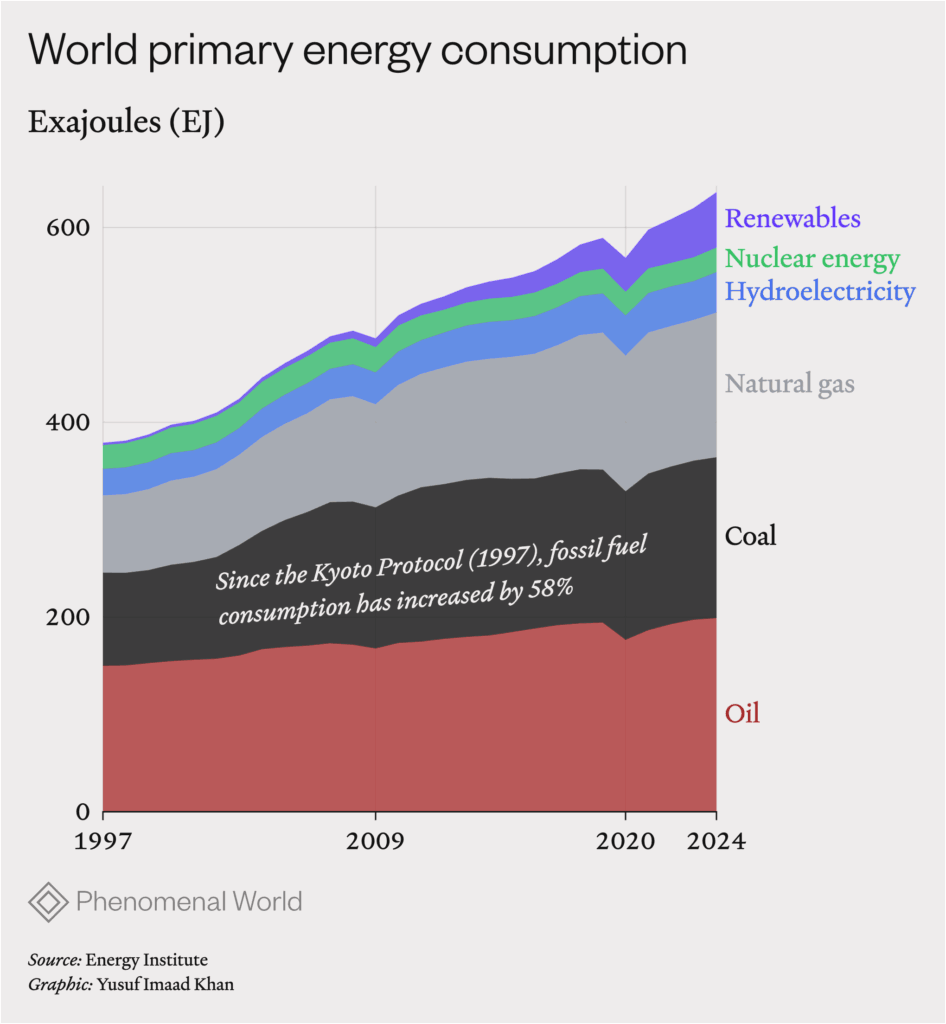
Since the Kyoto Protocol was signed by 34 industrialized nations in 1997, buying and selling carbon emission rights has been a key tool in the United Nations’ efforts to tackle climate change. This approach gained traction in 2005 when enough countries ratified the agreement. The carbon market became central to international climate diplomacy, especially highlighted by the Paris Agreement in 2015. Recently, at COP29 in Baku, Azerbaijan, a global carbon market was officially launched, enabling countries to meet their emission reduction goals by purchasing emission credits from projects in other nations.
But this progress has shifted the focus away from what truly addresses the climate crisis. Instead of pushing for a complete move from fossil fuels, the UN has encouraged small adjustments in the economic framework by elevating carbon prices and promoting cleaner alternatives through the carbon market. However, the challenge of transitioning away from fossil fuels involves long-term investments that current prices alone can’t facilitate. Over the past quarter-century, it’s become evident that a global carbon market alone cannot decarbonize the world at the pace needed.
The Market’s Approach
For decades, carbon markets have aimed to rectify what economists call “market failure”—the idea that unchecked emissions don’t include their full cost to society. The theory suggests that if the price of carbon reflects the real social costs, producers and consumers will change their behavior, leading to reduced emissions. Both governments and companies can implement these changes through taxes or pricing systems.
However, these measures often introduce new expenses for businesses, leading them to either reduce emissions through green investments or seek cheaper offsets. While this sounds effective, the reality is that offsetting can delay the necessary green investments needed to combat climate change.
Proponents of carbon markets argue they are a fast and cost-efficient way to reduce emissions, often easier to implement than strict regulations. Yet evidence shows these markets have not achieved the price levels necessary to meet international targets. For instance, only a tiny fraction of global emissions are covered by carbon pricing mechanisms, and many fall short of recommended price levels.
The Challenge of Pricing
One major issue is that the established prices for carbon emissions aren’t aligned with what scientists say is needed to limit global warming. For example, estimates from the Intergovernmental Panel on Climate Change (IPCC) suggest that emissions should be priced significantly higher than what is currently happening in many regions. The lack of a uniform international carbon price complicates effective global emission reductions.
Even if carbon prices were to rise, many industries, especially those dependent on fossil fuels, would continue their practices because viable alternatives aren’t readily available. Current market structures also favor fossil fuels, making it tough for renewable energy sources to compete.
Investments in Renewables
Renewable energy providers often struggle with low profit margins, as the financial structure of the energy market tends to favor fossil fuel companies. Additionally, while energy generation from renewables is most abundant during periods of low demand, fossil fuel reliance remains deeply embedded in our economic systems. As a result, merely increasing carbon prices without prior substantial investment in renewable technologies won’t lead to a swift transition.
Land and Carbon Offsets
Meanwhile, relying on carbon offsets through reforestation and related projects is not a feasible long-term solution. While such projects are essential, they lack the scale required to balance out global emissions fully. Furthermore, the land needed for large-scale reforestation cannot be adequately provided, compounded by competing agricultural and urban development demands.
Currently, many forest conservation projects have not lived up to their promises in terms of carbon sequestration, underscoring that offsetting cannot substitute for the real decarbonization of energy and production systems. The effectiveness of these projects is often overstated, highlighting a need for genuine systemic changes rather than reliance on unclear offset strategies.
The Path Forward
While it’s essential not to dismiss the idea of carbon pricing and offsets entirely, they should not replace planned governmental action towards cleaner energy systems. Future efforts must focus on developing accessible green technologies and infrastructure first. Only after these systems are in place will rising carbon prices truly facilitate a significant shift towards sustainability.
The journey from the Kyoto Protocol to today has seen continued fossil fuel consumption, underscoring the weakness of proposed solutions so far. Carbon pricing can become a useful tool in the future, but as of now, it cannot replace the necessary proactive measures required to create a sustainable energy landscape.
Conclusion
The fight against climate change requires more than just market adjustments; it calls for a comprehensive, strategic approach that includes government investments and planning. Only through serious commitment can we begin to transition to a cleaner, more sustainable world.
