
Skanska USA Building: A Leader in Construction
Skanska USA Building is one of the largest general contractors in the nation. Founded by Swedish owners who purchased Blue Bell-based Barclay White in 2000, Skanska has expanded its presence across the country. With offices in major locations such as New York, California, Texas, and Florida, the company has built a strong team of engineers, architects, and managers.
The Skanska office in Conshohocken, Pennsylvania, has been involved in significant projects at Philadelphia International Airport and the Market Street retail area. They’ve also contributed to Delaware River bridge projects. Recently, their focus has shifted to the region’s main employment sectors, particularly education and life sciences. Noteworthy projects include work for Swarthmore College, Lehigh University, and various hospitals like the University of Pennsylvania and Jefferson Health.
With recent federal funding cuts impacting education and medicine, Skanska and its competitors are exploring future opportunities. Todd Lofgren, the executive vice president and general manager of the Conshohocken office, shared insights during a recent interview.
Lofgren noted that concerns about President Trump’s tariffs and budget cuts had raised doubts about future construction. However, the outlook is improving, with many projects anticipated to start sooner than expected.
When discussing local colleges, he mentioned that while some institutions are facing budget challenges, others are moving forward with critical maintenance and capital projects, albeit at a slower pace than planned.
Interestingly, there’s a shift in focus from traditional warehouse construction to building data centers, and Skanska is actively involved in this trend. Their operations span several states, and they’ve set up the Skanska Advanced Technology Group to assist with data center projects in Pennsylvania, primarily driven by major tech companies.
But why are data centers located in more rural areas rather than cities? Lofgren explained that access to sufficient electrical power is a major factor, with many data centers wanting to be close to nuclear power stations to meet their energy needs.
In terms of new industrial projects, pharmaceutical manufacturers are making significant investments to bring production back to the U.S. This shift is motivated by a desire to regain control over production processes and mitigate supply chain vulnerabilities, a lesson learned during the COVID pandemic.
Despite some concerns over the biotech industry’s slowdown, projects like a major new factory in Delaware are still progressing. However, the construction industry is grappling with a labor shortage, as fewer younger workers are entering skilled trades.
The issue extends beyond the availability of workers, as Lofgren pointed out that recent actions by U.S. Immigration and Customs Enforcement are further complicated by the labor shortage.
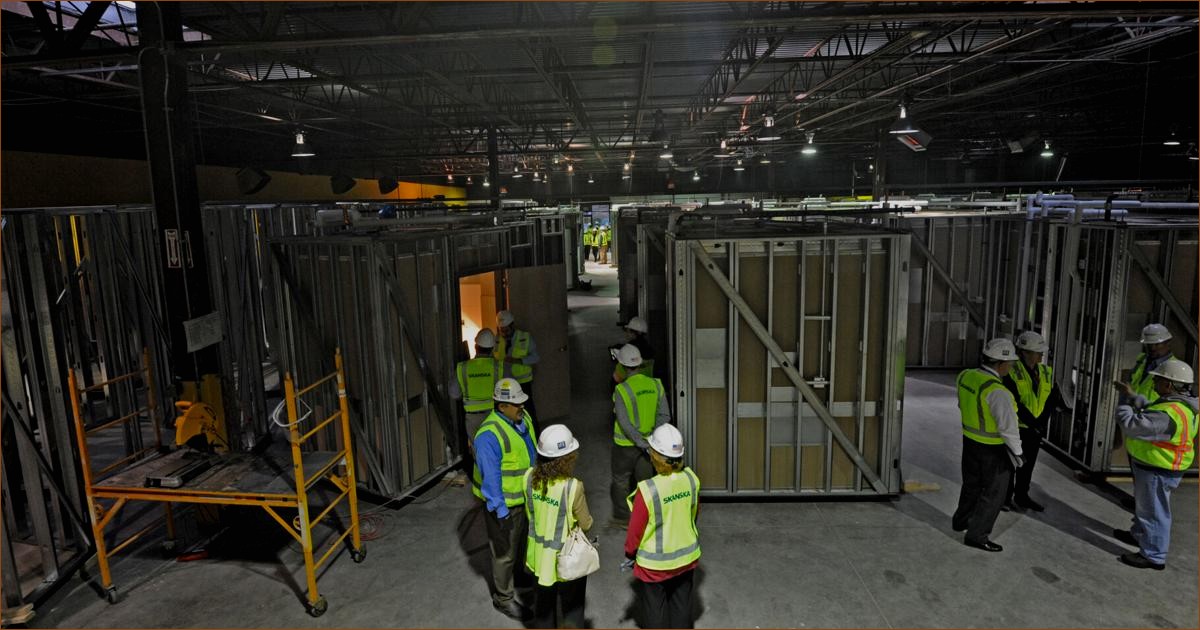
On the topic of technology and automation, Skanska is slowly adopting more modern methods to streamline construction processes. They have engaged in prefabrication techniques to improve efficiency and reduce delays. With tools like AutoCAD, their teams are better equipped to coordinate projects across various sites successfully.
For educational projects, Skanska has successfully managed construction timelines, ensuring everything is completed in time for the school year. In contrast, public school projects present unique challenges due to differing contracting systems that can limit their control over the process.
In summary, Skanska USA Building continues to navigate a changing landscape in the construction world, adapting to new demands, technologies, and challenges while maintaining its commitment to quality and innovation.
