
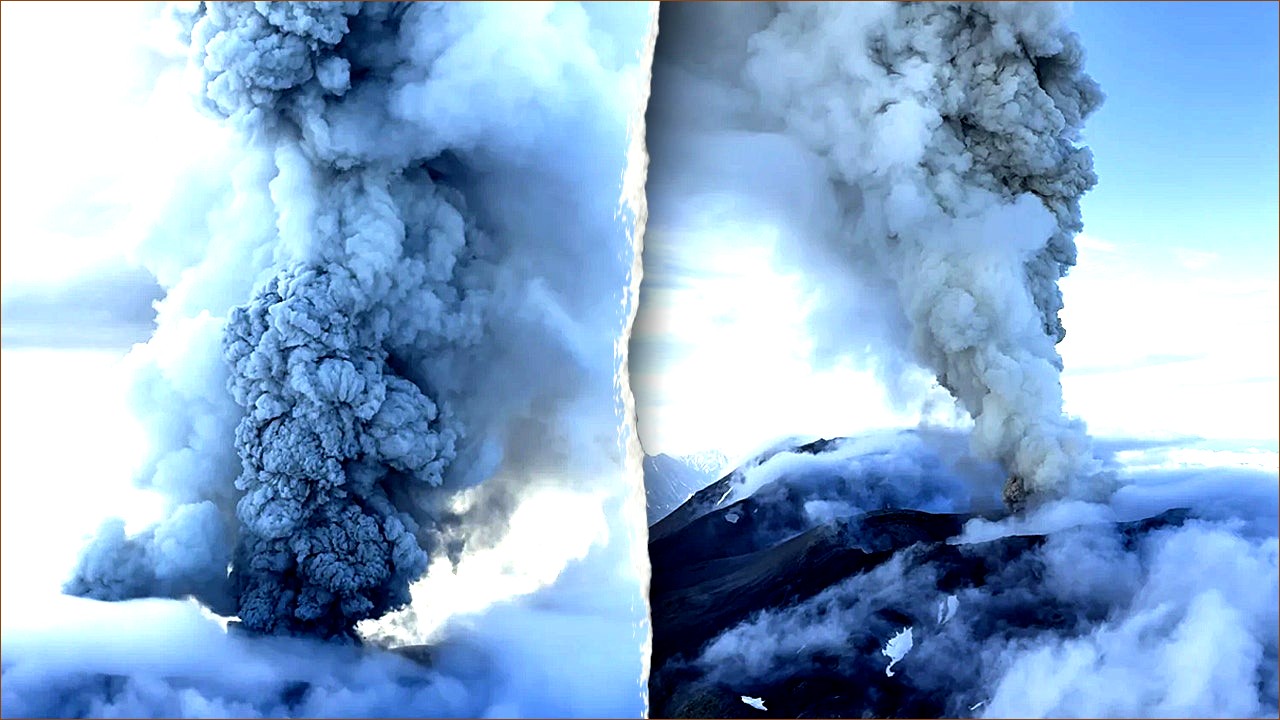
Volcanic Eruption in Russia Marks a Historic Event
A volcano in far eastern Russia erupted for the first time in centuries on Sunday, releasing hot ash high into the sky. This event comes less than a week after a significant 8.8-magnitude earthquake triggered tsunami alerts across the Pacific Ocean.
The Krasheninnikov volcano, located on the Kamchatka Peninsula, sent ash up to 6 kilometers (about 3.7 miles) into the atmosphere, according to staff at the Kronotsky Reserve. Pictures from Russian state media show thick clouds of ash rising ominously above the landscape.
During the eruption, Kamchatka’s emergency services reported that the ash plume was moving eastward toward the Pacific Ocean. Fortunately, there are no populated areas directly in its path, and so far, no ashfall has affected nearby communities.
Alongside the volcanic activity, a 7.0-magnitude earthquake shook the region, leading to tsunami warnings for three areas in Kamchatka. However, these alerts were later lifted by Russia’s Ministry for Emergency Services.
Olga Girina, who heads the Kamchatka Volcanic Eruption Response Team, confirmed that this is the first eruption of the Krasheninnikov volcano in 600 years, a claim backed by some records. However, the U.S.-based Smithsonian Institution’s Global Volcanism Program indicates that the last confirmed eruption was in 1550, leading to some questions about the timeline.
Despite this confusion, experts from the Kamchatka Volcanic Eruption Response Team noted that while the explosive activity had decreased, the volcano might still experience moderate eruptions in the near future.
Interestingly, the recent earthquake has also resulted in tsunami waves reaching Japan and Alaska, with warnings issued as far as Hawaii and the west coasts of North and Central America.
As the situation continues to develop, residents in the affected areas remain vigilant, monitoring for any signs of further volcanic activity.
