
Nusano’s New Facility Marks a Major Milestone in Isotope Production
West Valley City, Utah – June 11, 2025
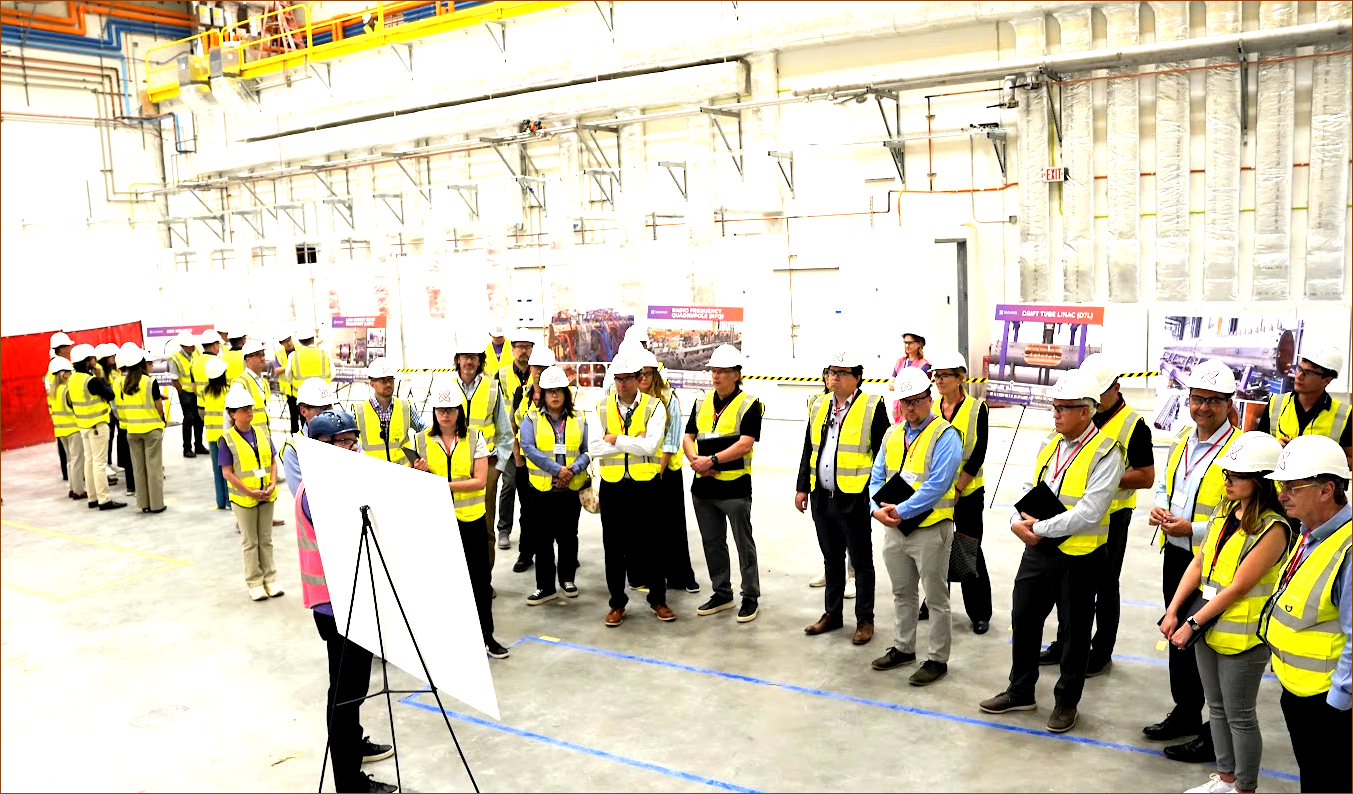
Nusano, a company focused on nuclear technology and isotope creation, recently showcased its new 190,000-square-foot facility to media, investors, and special guests. During the grand opening, the company celebrated a big achievement: enriching gadolinium-160 (Gd-160) to a remarkable 99.2% purity, all completed in-house.
This accomplishment represents a key step for Nusano in boosting the U.S. supply of both stable and radioactive isotopes. These materials are vital for medical diagnostics, cancer treatments, battery technology, and future energy systems.
“We are dedicated to creating a completely domestic supply chain for stable isotopes, which is important for innovation,” said Nusano’s CEO, Chris Lowe.
Lowe further explained that Nusano’s technology is designed for reliability and high purity, helping customers improve their operations and stabilize their supply chains. Stable isotopes like Gd-160 play a significant role in producing radioisotopes. The natural form of gadolinium contains only about 21.86% of the desired isotope, but Nusano’s ability to increase that to 99.2% opens up new possibilities for producing high-quality radioisotopes.
At the opening event, Lowe highlighted how this advancement allows Nusano to expand its reach. “We can explore more elements and produce isotopes more quickly and at a higher level of purity,” he stated, emphasizing the significance of keeping the supply chain local to West Valley.
Austin Yusi Cao, Nusano’s Director of Mechanical Engineering, also discussed how the facility is equipped to handle complex operations. “This well-designed building, which took five years to create, is built to support everything we do here,” he mentioned, pointing out that the facility includes advanced equipment designed to enhance isotope production.
Irina Petrushina, an Applied Physicist at Nusano, showcased the company’s linear accelerator (LINAC), which is crucial for producing radioisotopes. By accelerating charged particles like protons or alpha ions, the LINAC helps initiate nuclear reactions necessary for medical isotopes.
“With technology dating back to the 1940s, combined with our unique ion source, we are able to efficiently produce isotopes, launching operations in 2025,” Petrushina explained.
Nusano’s approach to production is designed to be responsive and scalable, allowing it to produce multiple isotopes simultaneously — something existing suppliers cannot achieve without significant lead time.
“At Nusano, we can produce 12 different isotopes at once, compared to traditional methods that require planning years ahead,” Lowe noted, hinting at the potential for expanding the range of isotopes they could produce to over 50 in the future.
Emphasizing the importance of domestic production, Lowe pointed out that most stable isotopes currently come from places like Western China or Russia. “By establishing a local supply, we enhance national security and promote innovation,” he said, highlighting the limitations faced by traditional suppliers.
The new facility is exceptionally secure, built to withstand significant earthquakes with its strong concrete structure supported by deep pillars. “This is the safest structure I’ve ever seen,” Lowe asserted, explaining that production of sensitive materials like uranium will take place at a different, highly secured location.
Located near the 201 Expressway and Bangerter Highway, Nusano’s new facility is part of a broader Medical Innovation Technology (MIT) research campus set to become a key hub for medical manufacturing and innovation in Utah.
Lowe concluded with optimism about the facility’s long-term impact: “Years from now, we’ll look back and see this was where it all began.”
For more details about Nusano and its work, you can visit their official website.
