
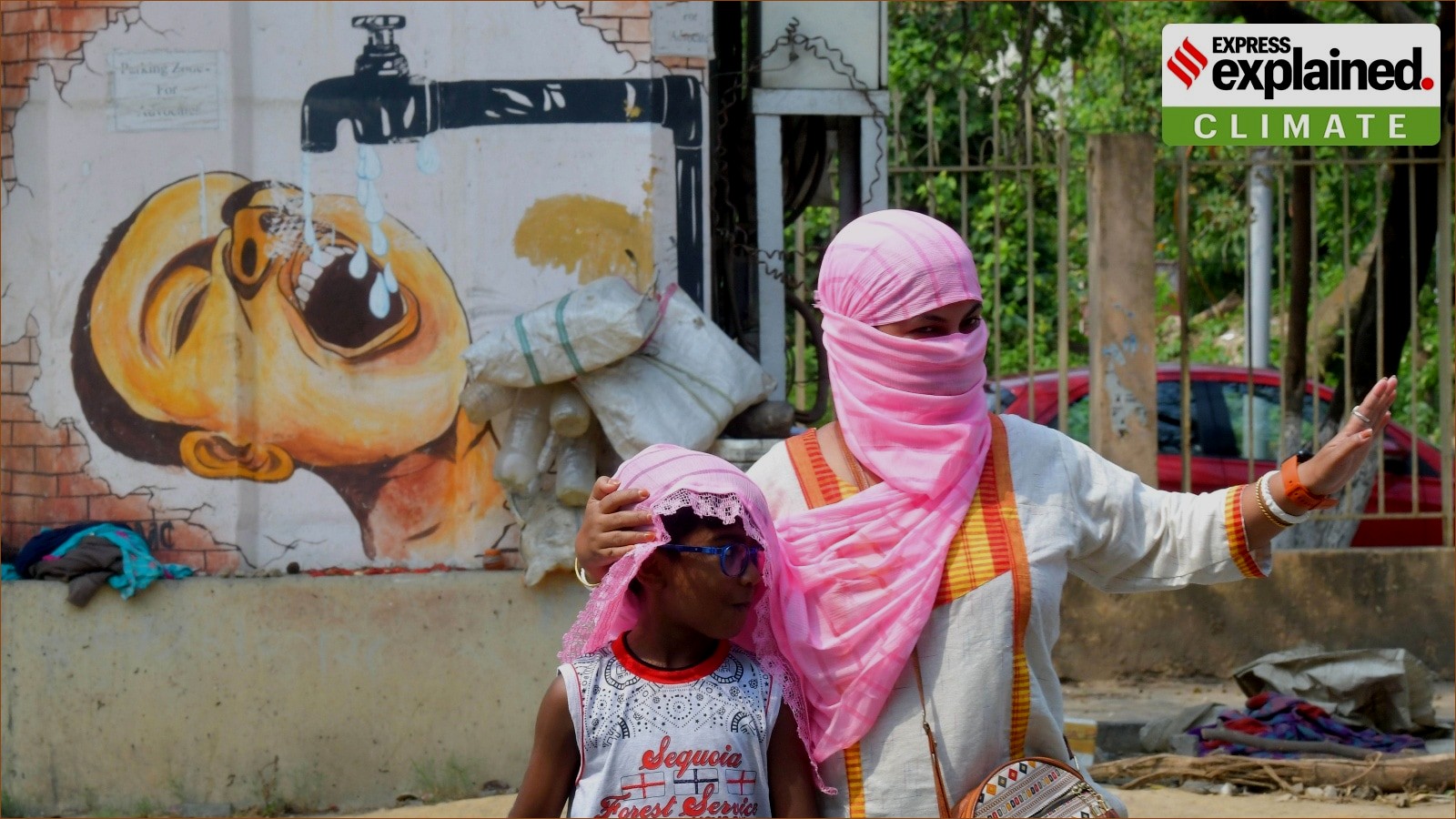
Study Reveals Widespread Heat Risk in India
According to a recent study, about 76% of India’s population is facing a significant risk due to extreme heat. This study highlights that residents of states like Delhi, Maharashtra, Goa, Kerala, Gujarat, Rajasthan, Tamil Nadu, Andhra Pradesh, Madhya Pradesh, and Uttar Pradesh are particularly vulnerable.
The research, titled “How Extreme Heat is Impacting India: Assessing District-level Heat Risk,” was published on May 20 and conducted by a team from the Council on Energy, Environment and Water (CEEW), including Shravan Prabhu, Keerthana Anthikat Suresh, Srishti Mandal, Divyanshu Sharma, and Vishwas Chitale.
To assess this heat risk, the researchers created a heat risk index that examined 734 districts across the country, taking into account 35 different indicators such as the frequency of extremely hot days, population density, and changes in land use.
Understanding Heat Risk
Heat risk is different from concepts like heatwaves and heat stress. Heatwaves are extended periods of abnormally high temperatures, while heat stress occurs when body temperatures exceed normal levels, leading to discomfort or even heat strokes.
On the other hand, heat risk refers to the chance of experiencing heat-related illnesses or fatalities due to extreme temperatures. This risk is influenced by three main factors: the severity of the heat, how long people are exposed to it, and the vulnerabilities of the communities affected.
Causes of Increased Heat Risk
The study uncovered several worrying trends.
Rising Number of Warm Nights: Between 2012 and 2022, the number of very warm nights—when temperatures stay high at night—has increased more than the number of very warm days. Over 70% of districts experienced at least five extra warm nights during this period. This is a concern since it prevents the body from cooling down after hot days, heightening the risk of heat-related health issues.
Increasing Humidity in North India: The study also noted a rise in relative humidity in North India, especially the Indo-Gangetic Plain. Humidity levels rose significantly, making it tougher for the body to cool down and increasing the likelihood of heat-related illnesses.
High Population Density and Urbanization: Districts with high population density, like Mumbai and Delhi, are facing the brunt of extreme heat. Rapid urbanization in smaller cities is also contributing to this problem, as concrete structures absorb and emit heat.
Important Context
The past year, 2024, was the warmest on record globally and in India. India’s temperature was noted to be about 1.2 degrees Celsius higher than averages from 1901-1910. Despite a smaller increase compared to global figures, the country has seen serious consequences, including a record number of heatstroke cases, surpassing 44,000 last year.
Current heat action plans (HAPs) aimed at mitigating extreme heat are insufficient, as many lack long-term strategies and effective implementation. Without proper planning and action, the country may face a rising number of heat-related deaths in the coming years due to more frequent and severe heatwaves.
This study serves as a crucial wake-up call, emphasizing the need for immediate action to address the growing threat of extreme heat across India.
