
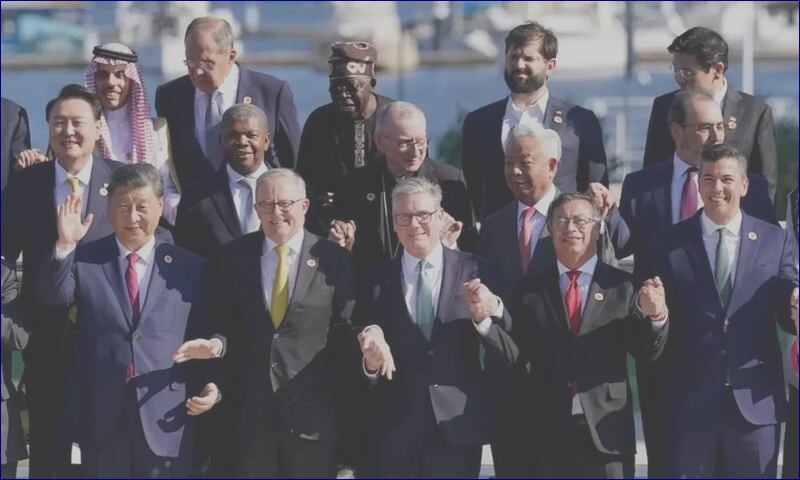
RIO DE JANEIRO: G20 Leaders Gather to Address Climate Change
On Tuesday, leaders from the world’s 20 largest economies will meet in Rio de Janeiro to focus on sustainable development and the shift towards cleaner energy. Their discussions are aimed at boosting prospects for a successful agreement on climate action at the upcoming UN climate talks in Azerbaijan.
The host of the COP29 climate summit had called on G20 nations a day before to demonstrate a strong commitment to combat climate change and provide clear guidelines to revive stalled negotiations in Baku.
As the planet is set to experience its hottest year ever, these leaders are eager to solidify a global approach to climate issues before Donald Trump potentially returns to the presidency in January. Trump has indicated he might reverse U.S. policies related to climate change and withdraw from the crucial Paris Agreement.
In a joint statement on Monday, G20 leaders emphasized the need to significantly increase climate finance from billions to trillions of dollars from various sources to effectively address global warming. They also pressed COP29 negotiators to settle on a new financial target, outlining how much assistance wealthy countries should provide to developing nations facing climate challenges. This financial agreement is a major point of contention in the talks.
UN climate chief Simon Stiell remarked, “G20 Leaders have clearly instructed their negotiators at COP29: don’t leave Baku without a successful new finance goal. This is vital for every country’s interests.” Negotiators are expected to produce a complete draft of this financial goal by Wednesday evening, according to Yalchin Rafiyev, the summit’s lead negotiator from Azerbaijan.
“We are increasing our pace,” Rafiyev noted, adding that the final outcome will depend heavily on the commitment of participating countries to seek solutions.
Despite ongoing discussions, which are set to wrap up on Friday, a concrete financial target has yet to emerge. Economists are suggesting that the goal should be at least $1 trillion every year. The G20’s statement acknowledged the need to resolve the financial deadlock, but did not provide clear paths to achieve this.
Some environmental activists criticized the G20’s statement, calling it vague regarding climate finance. Oscar Soria, head of The Common Initiative, pointed out, “This ambiguity in the G20 declaration could weaken trust in the negotiations since the G20 plays a crucial role in bridging the gaps between developed and developing nations.”
Developed countries, particularly in Europe, have argued that more nations, including wealthier developing countries like China and prosperous Middle Eastern nations, need to contribute to climate finance to achieve ambitious climate goals.
