
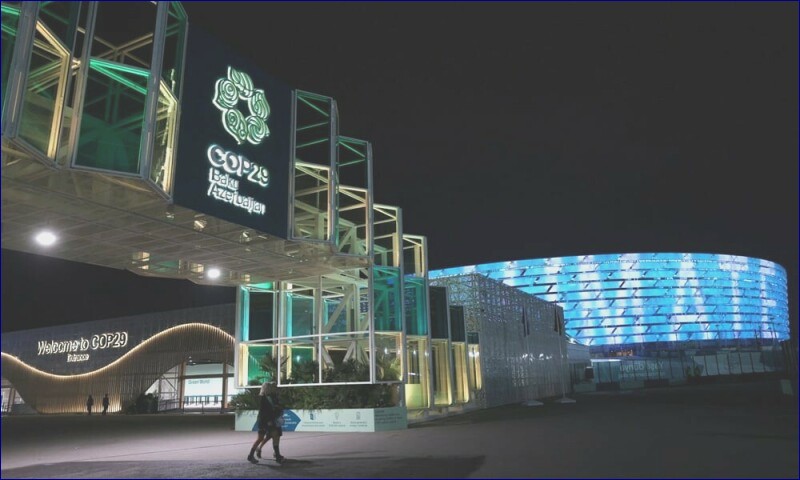
BAKU: World Leaders Gather for COP29 Amid Notable Absences
On Tuesday, numerous world leaders arrived in Baku, Azerbaijan, for the COP29 climate summit. However, the absence of several prominent figures has left a noticeable gap at this crucial event, particularly with the implications of Donald Trump’s recent election victory weighing heavily on the discussions.
Over 75 leaders are anticipated to participate over the two-day event, yet many heads of the largest and most polluting economies are missing. Notably, only a few leaders from the G20, responsible for approximately 80% of global greenhouse gas emissions, are attending, including UK Prime Minister Keir Starmer. His Energy Secretary, Ed Miliband, emphasized on social media that the UK views climate security as integral to national security.
Significant G20 leaders such as Joe Biden, Xi Jinping, Narendra Modi, and Emmanuel Macron are not present, raising questions about the future of global climate cooperation, especially in light of the uncertainty surrounding U.S. climate policies with Trump’s potential re-election. Washington’s chief climate envoy aimed to reassure others in Baku that despite changes in leadership, U.S. commitments to tackle climate change would remain active, albeit at a lower intensity.
UN climate chief Simon Stiell opened the conference by urging countries to work together and demonstrate that global collaboration remains strong, despite the challenges they face. However, the conference’s start was delayed due to disagreements over the official agenda, which caused hours of waiting before formal discussions could begin at the venue near the Caspian Sea.
By the evening, nations reached an agreement on new UN standards for a global carbon market, a significant advancement towards enabling countries to trade carbon credits for meeting their climate goals. COP29 president Mukhtar Babayev celebrated this development as a “breakthrough” after extensive discussions, although he noted that further efforts are needed to fully establish the UN-backed market.
One of the main goals of COP29 remains to secure increased funding for climate initiatives in developing countries, which suffer the most from climate change despite contributing the least to the problem. Countries like low-lying islands and war-torn nations are advocating for a substantial increase in the existing annual pledge of $100 billion to help them transition to clean energy and adapt to climate impacts.
Babayev acknowledged that while trillions of dollars might be necessary, a more “realistic” target would be in the hundreds of billions. Ongoing negotiations have been complicated by disagreements over payment responsibilities, making meaningful progress challenging ahead of COP29.
“These will not be easy negotiations, perhaps the most challenging since Paris,” stated Germany’s climate negotiator, Jennifer Morgan. Developing nations urge that without proper financial support, they will find it difficult to enhance their climate commitments, which are due by early next year.
The small number of wealthy nations currently providing financial aid wants to broaden the donor base to include other rich countries and top polluters like China and the Gulf states, a proposal that has been firmly rejected by Beijing. Stiell cautioned wealthy nations to rethink any notions that climate finance is simply a form of charity.
Approximately 50,000 individuals are attending the summit in Azerbaijan, a country rich in oil and located between Russia and Iran, including leaders from many African, Asian, and Latin American countries heavily impacted by climate challenges.
