
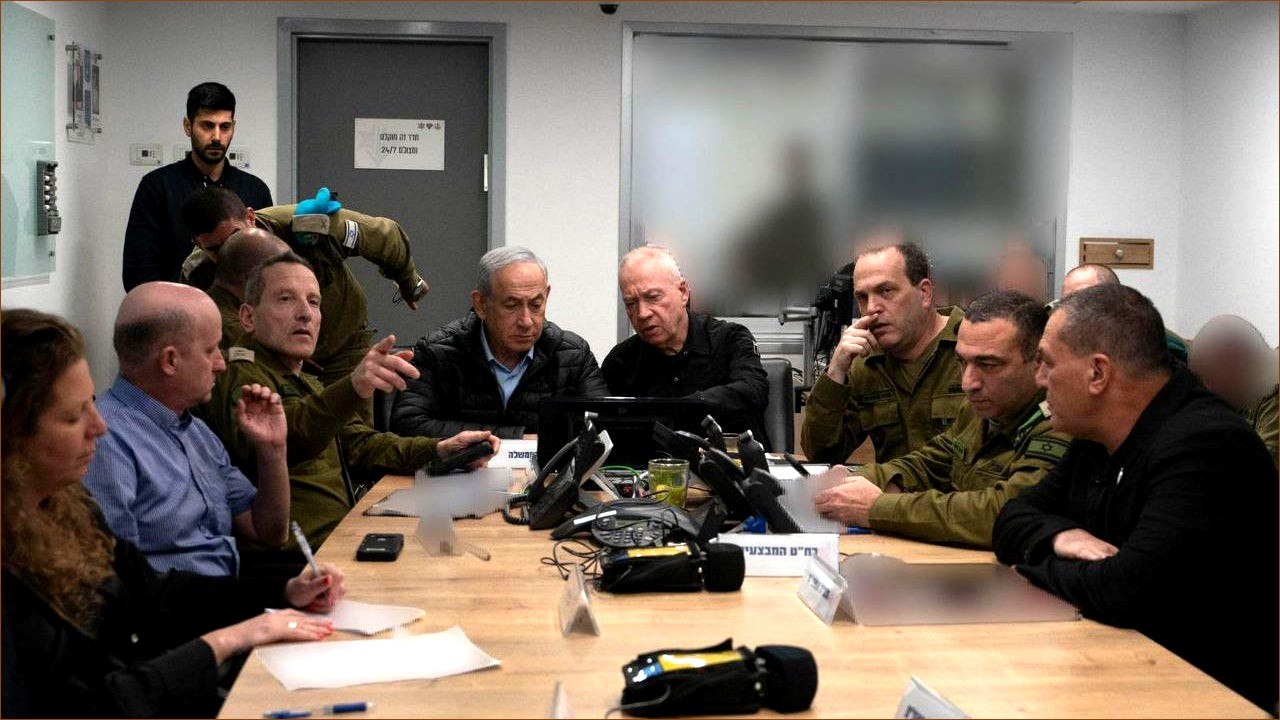
The Biden administration was alerted to Israel’s imminent retaliation against Iran for the barrage of ballistic missiles that struck on October 1. Sources familiar with the matter disclosed that multiple discussions took place between officials in both Washington and Jerusalem, with precise timing of the planned strikes communicated to U.S. authorities just before they occurred on Friday night.
As speculation spread like wildfire regarding the long-anticipated operation—one Israel had promised to carry out in response to the Iranian aggression—it became increasingly evident that a military response was on the horizon. This perception was heightened by the announcement from U.S. Central Command regarding the deployment of additional F-16s to the region.
ISRAEL LAUNCHES RETALIATORY STRIKES AGAINST IRAN
In a dramatic escalation, the Israeli Defense Forces (IDF) commenced airstrikes on Iranian military assets early Saturday morning, an operation referred to as "Days of Repentance." This response aimed squarely at military targets, justified as an act of self-defense following the recent missile attack on Israel. John Kirby, communications director for the White House National Security Council (NSC), refrained from confirming the connection between U.S. defense reinforcements and the recognized advance of an Israeli attack yet emphasized American commitment to Israeli security.
Sean Savett, an NSC spokesman, later corroborated that the Israeli operations targeting Iran were initiated due to the previous attacks on Israel, asserting the strikes fell within the realm of justified self-defense.
As the Israeli air assault unfolded, which reportedly mobilized approximately 140 aircraft, the IDF triumphantly announced the mission’s successful completion a few hours post-launch. The Pentagon subsequently issued a statement revealing that Secretary of Defense Lloyd J. Austin III had engaged in dialogue with Israeli Defense Minister Yoav Gallant to receive updates regarding the airstrikes.
Austin reaffirmed the United States’ unwavering commitment to Israel, emphasizing its rights to defense while solidifying the enhanced military posture of U.S. forces across the region to protect personnel and allies from Iranian provocations.
In a stern warning directed at Iran, IDF Spokesperson Rear Admiral Daniel Hagari made it clear that any further escalation would compel a robust response from Israel. Hagari expressed, "Our message is abundantly clear: any entity threatening the State of Israel will confront significant repercussions."
US MILITARY FY 2024 DATA SHOWCASES FRESHEST DEPLOYMENTS AMID BOLSTERED ISRAELI DEFENSE STRATEGY
Following the strikes, reports emerged of additional military actions targeting bases in Syria and Iraq, although the IDF has yet to comment on these specific operations. An Israeli defense source asserted that the chosen targets of the attack were exclusively military and intelligence-related.
The Iranian response was swift, as the Tasnim news agency, linked to Iran’s Revolutionary Guard Corps (IRGC), warned that any retaliation would be met with proportional consequences. They stated, "We reserve the right to respond to any attack," thus indicating that the charged exchange between Israel and Iran is far from over.
While the exact efficacy of the airstrikes remains to be assessed, local outlets suggest that Israel’s operations disrupted Iranian air defense capabilities. Reports indicated that Iranian targets, including missile production facilities directly linked to threats against Israel, were effectively engaged by the Israeli Air Force.
As the whirlwind of military exchanges continues to escalate, both nations appear poised for a protracted confrontation, underscoring a region fraught with tension and uncertainty.
