
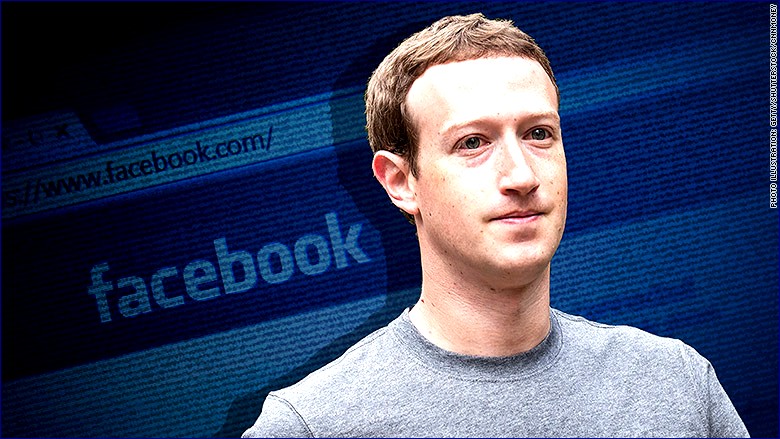
In a startling revelation, Facebook has disclosed that a significant breach has compromised the data of nearly 50 million users of its sprawling social network, granting attackers the extraordinary ability to commandeer individuals’ accounts across various platforms and applications linked through Facebook’s login system.
At the heart of this debacle lies a vulnerability in a seemingly innocuous feature dubbed “View As.” Designed to enable users to see their profiles from another’s perspective, it became the gateway for malicious actors, who deftly exploited this weakness, effectively assuming control over accounts with unfettered access. This misuse permits not only the manipulation of one’s profile but also the potential to peruse the private exchanges and shared information of friends within the account holder’s network. However, the company has assured the public that no credit card information was among the breached data.
In a posture of urgency, Facebook has admitted it remains in the dark concerning the identities and locations of these intruders. Nonetheless, swift action has been taken: the flaw has been rectified, and pertinent information has been relayed to the FBI and various legislative bodies, as well as the Irish Data Protection Commission, in accordance with GDPR stipulations. Yet, this regulatory body has responded with a note of caution, raising eyebrows regarding the timing and the level of detail provided.
In a sweeping response, Facebook enacted a forced log-out for over 90 million users on Friday, requiring them to re-engage with their accounts anew for security reassurances. Amongst these users were high-profile accounts, including those belonging to CEO Mark Zuckerberg and COO Sheryl Sandberg.
The company asserts there’s no essential action required from users regarding security measures or password resets, notwithstanding the unexpected disruption. Notifications will cascade to those affected, though specifics regarding whether a user falls within the vulnerable cohort — the 50 million or an additional 40 million logged out merely as a safety measure — remain elusive.
Compounding the intrigue, Guy Rosen, Facebook’s VP of Product Management, indicated that the attackers might have had the capacity to infiltrate third-party services accessed through a Facebook login. While this could extend to Instagram accounts using the same credentials, Rosen clarified that WhatsApp had not been compromised in this episode — marking this incident as arguably the most substantial hack in Facebook’s history.
The aftermath remains rather ambiguous; Facebook cannot ascertain if the hacked accounts were weaponized for nefarious means or if any private data was actually snared. The “View As” feature, now disabled, is under scrutiny as investigations progress.
“Historically, breach notifications of this caliber often evolve into grimmer scenarios as further details emerge,” cautioned Jessy Irwin, security chief at the cybersecurity firm Tendermint. She reflected on the situation’s breadth, suggesting it delves deeper into Facebook’s infrastructure than the Cambridge Analytica controversy did.
The vulnerabilities stem from a confluence of three distinct bugs, first surfacing in July 2017 during alterations to video uploading functions. Initial signs of compromised activity flickered into view on September 16, 2018, prompting an urgent inquiry that ultimately unveiled the attack just a week later. Swiftly, law enforcement was alerted, and by Thursday, the vulnerabilities had been mended, alongside a complete reset of login tokens to safeguard users.
The attackers succeeded in pilfering Facebook “access tokens,” those digital keys that keep users resigned to a state of logged-in convenience, sparing them the tiresome process of frequent sign-ins. As an additional protective measure, Facebook reset the access tokens for not only the 50 million impacted users but also an extra 40 million who had utilized the “View As” feature over the past year. This reset functionally severed associations with platforms like Instagram and Oculus, compelling users to reestablish those links.
“Each day, we confront relentless assaults from individuals intent on hijacking accounts or siphoning sensitive information… clearly, a more proactive strategy is essential to thwart such breaches before they ignite,” remarked Zuckerberg, underscoring the persistent threats lurking in the digital shadows.
This incident stands as the latest chapter in a tumultuous narrative for Facebook, as it grapples with an onslaught of security mishaps, privacy controversies, and misinformation challenges plaguing its reputation in recent times. In response, Facebook has pledged to bolster its security measures considerably, doubling its dedicated security personnel to 20,000.
“Security is an arms race, and our goal is to continuously evolve, fortifying our defenses against these persistent encroachments,” affirmed Zuckerberg, channeling a sense of resolve amidst the chaos.
