
In the vibrant tapestry of technology, autumn emerges not merely as a season, but as a launching pad for a constellation of new devices that promise to redefine our daily interactions. Apple has taken the stage with its latest iPhones, while Amazon has introduced an array of innovative smart speakers, including a microwave that responds to Alexa’s commands. Google is gearing up for its own spectacle of product unveilings next week, but this Tuesday, Microsoft is stealing the limelight, embarking on a showcase of remarkable devices poised for the bustling holiday shopping season.
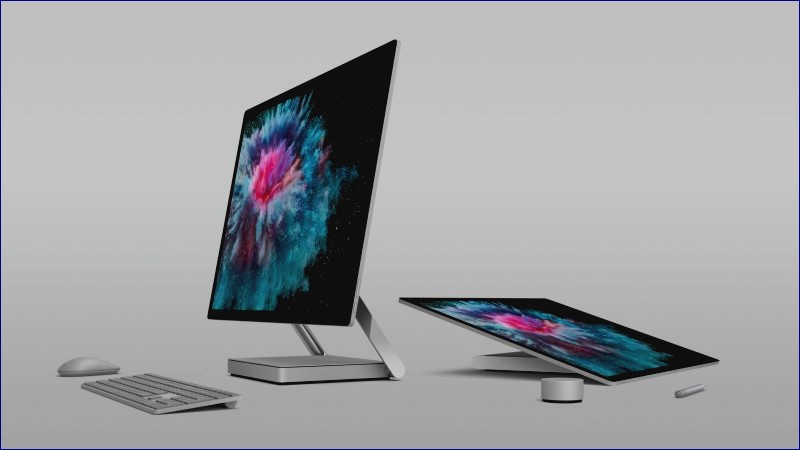
Central to this grand reveal is the dazzling Surface Studio 2, a fresh iteration of Microsoft’s desktop that asserts itself against competitors like the iMac, particularly tailored for creative professionals. Launched in October 2016, this latest incarnation promises not just enhanced graphics, but is touted as Microsoft’s fastest Surface device ever constructed. Sporting an expansive 28-inch display and supporting USB-C, the Surface Studio 2 is available for pre-order starting at a wallet-stretching $3,499.
But the excitement doesn’t end there. Enter the Surface Headphones, priced at $349. These aren’t just any headphones; equipped with adjustable noise cancellation, they embrace technological savvy by automatically pausing video content the moment you remove them. More than just an auditory experience, they integrate Microsoft’s voice assistant Cortana, prepared to read your emails aloud or initiate conference calls—a fusion of sound and functionality that promises to enhance user experience when they launch later this year.
As we pivot our attention to the Surface Pro 6, Microsoft asserts a stunning 67% boost in speed compared to its predecessor, all whilst maintaining a robust battery life of up to 13.5 hours. The device seamlessly transitions between modes—tablet, laptop, or studio—an ultimate chameleon designed to adapt to various user needs. Offered in classic black and platinum, this versatile piece of technology starts at $899.
Peering back into the timeline of the Surface family, the original Surface Pro emerged in 2012, marketed initially as a tablet, its presence comparable to that of an iPad with a convenient keyboard cover. However, as the landscape evolved, so did Microsoft’s vision, rebranding it as a fully-fledged laptop with a touchscreen—a 2-in-1 marvel appealing to a diverse array of users from pilots to students, each requiring the seamless blending of note-taking and comprehensive functionality.
With the introduction of the Surface Laptop 2, a promise of speed and tranquility emerges, boasting faster, quieter typing experience and an impressive battery life of up to 14.5 hours. Notably, this device is an astonishing 85% speedier than its predecessor, now available in a striking new black, alongside familiar hues of burgundy, platinum, and blue, all starting at a competitive $999.
“Devices increasingly permeate every aspect of life,” remarked Yusuf Mehdi, Microsoft’s corporate VP of modern life and devices, in an interview with CNN. This assertion encapsulates the broader vision Microsoft has for its technology—harmonizing work and personal life in seamless cohesion.
In tandem with hardware, the software landscape is also evolving. Announcing the Windows 10 October 2018 Update, Microsoft emphasizes productivity enhancements. Among its features is the Your Phone App, promising users a streamlined connection between texts and photos from Android devices to their PCs, paralleling the integration offered by Apple with iMessage. The update also introduces a To-Do list that integrates directly with Outlook.com, allowing users to drag tasks into their calendars—streamlining productivity like never before.
Targeting enterprise professionals predominantly, Microsoft’s strategy is underscored by its substantial investment in productivity features. Analyst Andrew Hewitt from Forrester notes the significance of tools like Timeline, which allows users to revisit previous work, or Focus Assistant, designed to curtail distractions and keep notifications at bay.
In conclusion, an air of competition with Apple lingers as Microsoft unveils creative capabilities geared towards picture and movie editing. Yet, Maslow’s hierarchy of needs for their devices leans heavily towards empowering users to harness their productivity. The narrative of innovation from both hardware to software continues to unfold, ushering a future rich in possibility and integration.
